On this page
- 62expert comments collected
- 52verified word for word
- 3safety flags raised again and again
- Q1 2027planned FDA filing
The short version
Where retatrutide experts agree, and where they split
The verdict on size is nearly unanimous.
Retatrutide… is the most powerful weight loss drug yet. A significant issue is too much weight loss among the trial participants.
Read the second sentence again. It sums up the pattern we found across 62 on-the-record comments: the experts most impressed by retatrutide are often the same ones raising the same three flags.[1]
Those flags are heart rate, a skin-sensation side effect called dysesthesia, and what happens to muscle, bone and nutrition when people lose close to a third of their body weight. Here is how the opinion splits.
| Question | Where experts agree | Where they split |
|---|---|---|
| How big is the effect? | Largest average weight loss reported for an obesity drug so far | Whether a bigger number is the right goal (Kyle, Cheng vs Dubin, Francavilla) |
| Who is it for? | Many people will not need the 12 mg dose | Severe-obesity niche (Isaacs, William Blair) vs use “across the spectrum” (Lilly) |
| Heart rate | It goes up and stays up | Whether it matters: Prasad bets on longer lives; Isaacs and Hsieh say the data cannot tell yet |
| Dysesthesia | Common at the top dose, mostly mild to moderate | Concerning (Ard) vs tolerable, since most stayed on drug (Cork) |
| Muscle, bone, nutrition | Losses are expected at this scale | Little disagreement, mostly unknowns about the long term |
| Grey market | Buyers cannot know what is in the vial | Warn people off (Topol, Hyman, Cohen) vs harm reduction (Guevarra) |
| Early access | Demand is far ahead of supply | Lilly's pre-approval access program vs ethicists and clinicians asking how patients are chosen |
Efficacy
How big the retatrutide effect is, in experts' words
The numbers drive all of the excitement.
The first phase 3 readout, TRIUMPH-4 in December 2025, showed 28.7% average weight loss at 68 weeks in people with obesity and knee osteoarthritis.[2] Topol's reaction was blunt: “That's a lot of weight loss, folks.”[3] Daniel Drucker of the Lunenfeld-Tanenbaum Research Institute called it “A TRIUMPH” and in the same post noted “Mild dysesthesias.”[4]
TRIUMPH-1 followed on 21 May 2026, with 28.3% at 80 weeks on the 12 mg dose.[5]
TRIUMPH-1… demonstrates some of the most substantial weight loss outcomes ever reported with an anti-obesity medication.
Lead investigator Ania Jastreboff (Yale) said “every dose of retatrutide resulted in clinically meaningful weight reduction for nearly all participants.” In the extension for people with a BMI of 35 or more, the figure reached 30.3% at 104 weeks.[6]
Retatrutide is historic for our field. To get to 30% weight reduction from baseline is what we've been waiting for the last 25 years…
That is quite staggering… It has not been seen, this magnitude of weight reduction in people with type 2 diabetes.
Both spoke at the American Diabetes Association meeting in June.[7]
The bariatric-surgery comparison is everywhere. Graham Finlayson (Leeds) said results may approach “the range historically associated with bariatric surgery, which is striking.”[8] Carolynn Francavilla of the Obesity Medicine Association called it “essentially bariatric surgery but in a weekly injection.”[9]
Lilly's Dan Skovronsky said “We haven't seen that level of weight loss before”[10] and later called it “a new high-water mark.”[11] Hematologist-oncologist Vinay Prasad wrote that “the weight loss is astonishing.”[12]
Retatrutide average weight loss, by trial and dose
Percent of body weight; the figures experts were reacting to
That gap matters. Quote 28.3% and 25.0% side by side and you are comparing two different questions, not two different results.[13]
The low dose impressed people too. Hannah Beba, obesity clinical lead for the West Yorkshire Health and Care Partnership, noted that “even the lower 4mg dose delivered an average 19.0% weight loss.”[14] In type 2 diabetes, TRIUMPH-2 investigator Juan Frías said results “may change what we set out to achieve with a single therapy.”[15] Jens Juul Holst called them “of course impressive,” while noting weight loss looks smaller in people with diabetes.[16] TRIUMPH-2 and TRIUMPH-3 comments focused on A1C and heart outcomes rather than a headline weight figure, so they are not charted.
Positioning
Most people won't need the top retatrutide dose
Lilly's own scientists keep saying this.
On the February 2026 earnings call, Skovronsky said “Many people will not need this level of weight loss.” He also disclosed higher dropout rates among people with lower starting BMI, “including participants who discontinued for perceived excessive weight loss.”[17]
For some patients, 30% weight loss may be more than what they're seeking… For other patients, that may be what they need to get healthy.
Particularly for reta, I think, a lot of these patients aren't going to need to get to the maximum dose
If approved, it will most likely be reserved for patients with severe obesity who have not achieved adequate weight loss with currently available medications.
Here is the one real split. Lilly's commercial side wants a broader role. Ken Custer, who runs Lilly Cardiometabolic Health, sees “opportunities for retatrutide elsewhere and across the spectrum of obesity.”[18] He also pitched the 4 mg dose as “reaching nearly 20% weight loss with one escalation step.”[6]
Analysts at William Blair disagree. They expect tirzepatide to “continue to serve as the go-to medication, due to its balanced efficacy and tolerability profile.”[19] CEO Dave Ricks said in a June interview that retatrutide could help people with a BMI over 40 reach a healthy weight.[20]
Our read: Topol's “too much weight loss” line and Skovronsky's dropout remark point the same way. The 12 mg number sells the drug; a lower dose may be where most patients end up. Jastreboff's phrase for it was “the right medicine, the right dose at the right time for the right patient.”[7]
Safety
Three retatrutide safety signals experts keep raising
None of them is a dealbreaker yet.
But all three come up again and again, from enthusiasts and skeptics alike.
1. Heart rate
Literally, the only concerning signal is S22… the HR is still elevated years later.
S22 is a supplementary figure in the NEJM paper. Prasad then hedges the other way: “If I were a betting man, I would bet that these folks will live longer and better on Reta than placebo.”[12]
…a dedicated CV outcomes trial will be essential to define the magnitude of event reduction and long-term safety.
The cardiac data so far are thin. TRIUMPH-3 recorded 27 major cardiac events (MACE-3) on drug and 23 on placebo; William Blair's Andy Hsieh called it “difficult to draw solid conclusions at this point.”[21][22] Podcast host Mike Hart, MD, posted that retatrutide “consistently increases HR and decreases HRV”; the heart-rate variability part is his opinion, not trial data.[23]
2. Dysesthesia
…these incremental weight loss effects come at the price of more gastrointestinal adverse events along with a high proportion of patients experiencing dysesthesia…
In TRIUMPH-4, 20.9% of people on 12 mg reported dysesthesia.[2] Marie Spreckley (Cambridge) said the signal needs “continued monitoring,” even though most events were mild to moderate. Simon Cork (Anglia Ruskin) countered that “most patients who experienced this side effect remained on the medication.”[8]
3. Muscle, bone and nutrition
At this level of weight loss, predictable reductions in skeletal muscle and bone, particularly over the long term, can be anticipated.
Heymsfield also noted that adverse effects led 11.3% of people on the highest dose to drop out.[5] Seeley raised nutrition: “If you're eating very few calories, it's harder and harder to get all of the other things you need from your food.” He flagged gallstone risk as well.[11] Holst wants long-term follow-up on amino-acid and protein metabolism.[16]
Stomach side effects get less attention. Bajaj called them “about what you expect with GLP-1 receptor-based therapies.”[7]
| Signal | What trials showed | Who raised it | What would settle it |
|---|---|---|---|
| Heart rate | Raised heart rate, still elevated in later follow-up (NEJM fig. S22); 27 vs 23 MACE-3 events in TRIUMPH-3 | Prasad, Isaacs, Hsieh | A dedicated cardiovascular outcomes trial |
| Dysesthesia | 20.9% on 12 mg in TRIUMPH-4; mostly mild to moderate; most stayed on drug | Drucker, Ard, Spreckley, Cork | Continued monitoring in future analyses |
| Muscle, bone, nutrition | 11.3% quit for adverse effects at top dose; body-composition losses expected | Heymsfield, Seeley, Holst | Long-term follow-up on muscle, bone and protein metabolism |
One claim experts mostly dismiss: social-media talk that retatrutide makes people “fall out of love.” Mary Sco, MD called it “theoretical”[24], and ConscienHealth called it “a familiar exercise in hyperbole.”[25]
Grey market
How experts see the retatrutide grey market
Here, experts barely disagree at all.
What is being sold on the black market is not a medicine – it is entirely unverified, unapproved and not worth the risk.
That release announced lawsuits against six US sellers and said more than 14,000 listings had been reported to platforms.[26] Topol was saying the same a year earlier: “This is not kid stuff,” and of grey-market vials, “who knows what it really is.”[27]
The FDA should do whatever it possibly could do to get their hands on the actual drug that was injected by both of these patients…
CBS reported that two deaths involving black-market retatrutide were reported to FDA, in July and September 2026.[28] A report to FDA does not establish cause, which is exactly why Cohen wants the product tested.
People need to be very wary of something that's been sold to them called retatrutide because it is likely not retatrutide.
Context matters here. Sattar was speaking about a UK death, and a BMJ fact-check on 10 July said that case “may be less clear cut” than reported.[29][30]
The skepticism I've expressed here is aimed at the gray market wellness ecosystem, not at peptide science.
Attia's wider argument is that a drug is more than its amino-acid sequence: manufacturing and quality control are what make it one.[31] The few dissenters are about policy, not safety. Christle Guevarra takes a harm-reduction view (“I can't gate-keep people from going to find information”),[27] and Andrew Huberman called proposed limits on peptide sales “a terrible idea,” blaming Lilly's patent.[32]
Market watchers see the grey market as a launch problem. Jayne Hornung of Norstella's MMIT said “Lilly is going to face something we've never seen at launch before.”[33] Custer predicts buyers “will go with their feet” once authentic product exists.[34]
The experts' core worry is identity and purity, which no price list can answer. If you are evaluating research suppliers anyway, our retatrutide for sale page compares vendors, prices per mg and the batch certificates they publish. For what those certificates actually show, see our retatrutide COA data; for what users themselves report, see retatrutide Reddit reviews.
Price and access
Retatrutide price and launch: what experts expect
Price may decide who switches.
The question becomes: Are patients going to switch from $200 that they've been getting on the black market to $1,500 a month?
Hornung estimates a possible US list price of $1,000 to $1,500 a month.[33] Ricks has said future pipeline drugs, retatrutide included, “are not automatically included” in Lilly's November 2025 pricing deal with the US government.[35] Our retatrutide price history tracks what research vials cost in the meantime.
Timing is set, but with an asterisk. Lilly plans to file with FDA in the first quarter of 2027.[22] A court fight over whether retatrutide is regulated as a biologic is still running; Ricks said Lilly hopes “to come to a conclusion with the FDA to support a BLA application.”[34] Our retatrutide legal timeline follows that case.
Pre-approval access is the newest fight. Lilly says it is “medically appropriate” to supply authentic retatrutide to a limited number of patients who meet specific criteria and cannot join a trial.[36] Access first went to a single 79-year-old patient, with no obvious reason why. Ethicist Arthur Caplan said the reason is usually plain: “I can't think of a case where that wasn't true until this one.”[37]
Clinicians want answers too. Angela Fitch says they “are owed an explanation of some sort.” Fatima Cody Stanford and Gitanjali Srivastava have said they want more safety data before seeking compassionate use for their patients.[38]
Contrarian views
The retatrutide skeptics: more is not always more
The skeptics are not doubting the data.
They are questioning the goal.
A drug that produces spectacular weight loss but cannot be tolerated is not a spectacular treatment for the person who stops taking it.
His summary line: “In obesity care, more is not always more.”[39]
Although we keep striving for bigger and bigger numbers when it comes to the amount of weight loss, we really need to keep this in the context of real life.
Cheng put it more simply too: “It's not about weight loss, it's about health gain.”[7] Jastreboff, the trial's own lead investigator, told the New York Times that what matters is “the effects on a person's health over their lifetime.”[40]
Prasad lists the questions nobody can answer yet. Should a 45-year-old start on high-dose retatrutide, low dose, tirzepatide or semaglutide? He wants “a large, pragmatic, multi-arm, un-conflicted study.” He also asks what happens to a 36-year-old with a BMI of 26 who takes it, which he says “is already happening.”[12]
Heymsfield adds a warning that “vigilance will be needed” so the drug “does not prompt abuse by people with eating disorders.”[5] Beba's reminder still holds: retatrutide “remains investigational and unlicensed.”[14]
Finlayson's May caveat was that “we need to see the full peer-reviewed trial data.”[8] That data arrived in NEJM on 29 September.[13] It answered the efficacy question. It did not answer the comparative and long-term ones, and those are where the honest disagreement now sits.
Methodology
How we gathered these retatrutide expert quotes
Every quote here was checked against its source.
We collected 62 expert comments published between December 2025 and 14 October 2026. Of those, 52 were verified word for word against the full source text. Five more were checked through a page-reader extraction where we could not download the page, and five were paraphrases, which we report in prose without quotation marks.
Sources were posts on X (text and dates checked through a public mirror of the post data, not x.com itself), Lilly earnings-call transcripts, Healio, the Science Media Centre, peer-reviewed journals and news outlets. Where an ellipsis appears, words were cut; nothing was reworded.
We excluded two lines that search-engine snippets attributed to the NEJM and Lancet accounts; neither account posted them. We also left out a December 2025 post predicting FDA review in 2026, which turned out to be wrong.
The limits are real. Medscape, STAT+, the NYT and the BMJ full text were paywalled, so some voices are missing. We found no usable clinician posts on Bluesky. Many quoted experts are trial investigators, Lilly staff or paid advisers, and we have listed those ties where they were disclosed.
FAQ
Frequently asked questions
Do experts think retatrutide is better than tirzepatide?
On weight loss alone, most experts we tracked say retatrutide produced the largest average losses yet reported for an obesity drug. Several still expect tirzepatide to stay the default: William Blair analysts called it the likely go-to medication because of its balance of efficacy and tolerability, and Scott Isaacs expects retatrutide to be reserved for severe obesity. No head-to-head trial has been published.
What retatrutide side effects worry doctors the most?
Three come up repeatedly: a rise in heart rate that appears to persist, dysesthesia (abnormal skin sensations, reported in 20.9% of people on 12 mg in TRIUMPH-4), and loss of muscle, bone and nutrients at very large weight losses. Gastrointestinal effects are also common but are described as similar to other GLP-1 based drugs.
Why do some articles say 28.3% weight loss and others say 25%?
They measure different things. Lilly's 28.3% figure for TRIUMPH-1 uses the efficacy estimand, which counts people who stayed on the drug. The NEJM paper headlines 25.0% using the treatment-regimen estimand, which counts everyone who was randomized, including people who stopped.
What do doctors say about grey-market retatrutide?
Nearly every clinician on record warns against it, mainly because buyers cannot know what is in the vial. Lilly's chief medical officer called black-market product unverified and unapproved, and Harvard's Pieter Cohen urged FDA to test the product linked to two deaths reported in 2026. A minority, such as Christle Guevarra, take a harm-reduction view.
When will retatrutide be approved and what will it cost?
It is not approved anywhere as of October 2026. Lilly plans to file with FDA in the first quarter of 2027. No price has been set; one market analyst, Jayne Hornung, estimates a possible US list price of $1,000 to $1,500 a month, and Lilly's CEO has said it is not automatically covered by the company's 2025 pricing deal with the US government.
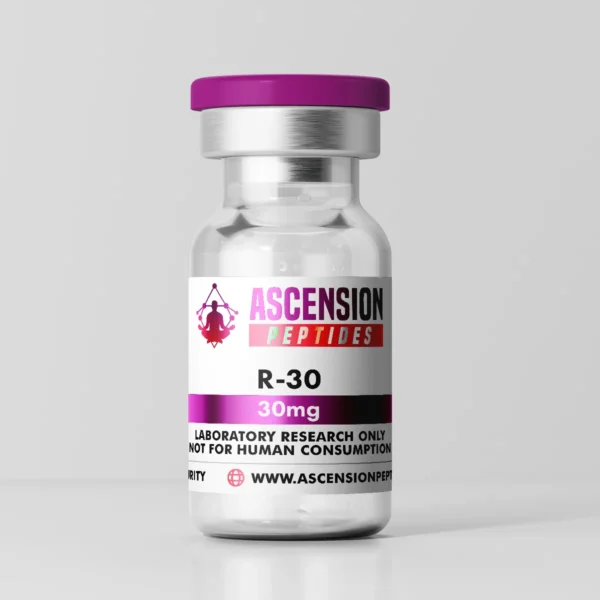
Comparing vendors? Start with the price table.
Our retatrutide for sale guide compares price per mg across 10 vendors and shows the batch certificates behind our pick: Ascension R-30, $125 with code PEPTIDEDECK.
Affiliate link. We earn a commission at no extra cost to you.
References
Sources
- Eric Topol. Post on X, May 21, 2026. Link
- Healio. Retatrutide confers up to 28.7% weight reduction, eases knee osteoarthritis pain (Jamy Ard perspective). Dec 11, 2025. Link
- Eric Topol. Post on X on TRIUMPH-4, Dec 11, 2025. Link
- Daniel J. Drucker. Post on X, Dec 11, 2025. Link
- Healio. Retatrutide induces weight loss of up to 28.3% for adults with obesity (Isaacs and Heymsfield perspectives). May 21, 2026. Link
- Eli Lilly and Company. Lilly's triple agonist retatrutide delivered powerful weight loss in pivotal phase 3 obesity trial. PR Newswire, May 21, 2026. Link
- Healio. Retatrutide benefits in obesity, type 2 diabetes 'quite staggering' (ADA Scientific Sessions). Jun 6, 2026. Link
- Science Media Centre. Expert reaction to topline results from the TRIUMPH-1 phase 3 trial of retatrutide. May 21, 2026. Link
- NPR Morning Edition (via HPPR). Eli Lilly says its next-gen obesity drug is more powerful than Zepbound and Wegovy. May 22, 2026. Link
- Annika Kim Constantino. Eli Lilly weight loss drug retatrutide clears obesity trial. CNBC, May 21, 2026. Link
- Jackie Flynn Mogensen. Blockbuster retatrutide trial signals a new high-water mark for weight-loss drugs. Scientific American, Sep 29, 2026. Link
- Vinay Prasad. Retatrutide: astonishing weight loss. Substack, Sep 30, 2026. Link
- TRIUMPH-1 trial report. New England Journal of Medicine, published Sep 29, 2026. DOI 10.1056/NEJMoa2604169. Link
- Pharmaceutical Journal. Phase III retatrutide study demonstrates 30% weight loss (Hannah Beba comments). May 22, 2026. Link
- Eli Lilly and Company. Retatrutide delivered substantial weight loss and A1C reduction in people with obesity and type 2 diabetes (EASD). PR Newswire, Sep 29, 2026. Link
- TCTMD. Retatrutide and survodutide make inroads on weight loss in diabetic patients (quoting Holst's Lancet comment). Oct 9, 2026. Link
- Eli Lilly Q4 2025 earnings call transcript. The Motley Fool, Feb 4, 2026. Link
- Eli Lilly Q1 2026 earnings call transcript. The Motley Fool, Apr 30, 2026. Link
- Annabel Kartal Allen. Eli Lilly retatrutide phase III TRIUMPH-1 study results. Clinical Trials Arena, May 22, 2026. Link
- CNBC video. Eli Lilly CEO: retatrutide will help those with BMI over 40 get to a healthy weight. Jun 8, 2026. Link
- Healio. Retatrutide induces significant weight loss in type 2 diabetes, established CVD (Isaacs perspective). Jul 23, 2026. Link
- Kristin Jensen. Lilly plans retatrutide FDA application after new obesity drug results. BioPharma Dive, Jul 23, 2026. Link
- Mike Hart. Post on X, Jan 22, 2026. Link
- Aarjavee Raaj. Is this new weight-loss drug making people fall out of love? CP24, Apr 15, 2026. Link
- ConscienHealth. Falling out of love on obesity medicines? Apr 8, 2026. Link
- Eli Lilly and Company. Lilly calls on online platforms, payment companies and regulators to shut down the illegal retatrutide black market. PR Newswire, Aug 12, 2026. Link
- Brueck and de Graaf. Eli Lilly's retatrutide is on the gray market in fitness circles before launch. Business Insider, Aug 30, 2025. Link
- Daniel Gilbert. Deaths reported to FDA involving bootleg 'reta' weight-loss drug. CBS News, Oct 13, 2026. Link
- Unilad. Retatrutide warning after man dies (reproducing Daily Mail quotes from Naveed Sattar). Jul 2, 2026. Link
- The BMJ. Fact-check post on X about UK retatrutide death reports, Jul 10, 2026. Link
- Peter Attia. The Drive #403 show notes: peptides. Aug 10, 2026. Link
- TBPN. Clip of Andrew Huberman posted on X, Mar 7, 2026. Link
- Kelly Bilodeau. Lilly's retatrutide faces a black market at launch. PharmaVoice, Oct 12, 2026. Link
- Eli Lilly Q2 2026 earnings call transcript (call held Aug 5, 2026). The Motley Fool. Link
- Max Bayer (Endpoints News). Post on X relaying Dave Ricks, Nov 6, 2025. Link
- STAT. Eli Lilly retatrutide: doctors seek the same access for their patients. Aug 3, 2026. Link
- Madison Czopek. Retatrutide, Eli Lilly and compassionate use. PolitiFact, Jul 1, 2026. Link
- AJMC. Lilly expands retatrutide access amid doctor pushback. Oct 2026. Link
- Ted Kyle. EASD: a study of contrasts in retatrutide and petrelintide. ConscienHealth, Sep 30, 2026. Link
- Rebecca Robbins. Experimental drug yields dramatic weight loss. New York Times, via the Boston Globe, May 21, 2026. Link
Keep reading
More retatrutide research
Disclaimer. For information only; not medical, legal or purchasing advice. Retatrutide is an investigational compound that has not been approved by the FDA or any other regulator. Products referenced on this site are sold for laboratory research and are not intended for human use. We earn a commission on purchases from Ascension Peptides made through our links.